
Agnus Dei
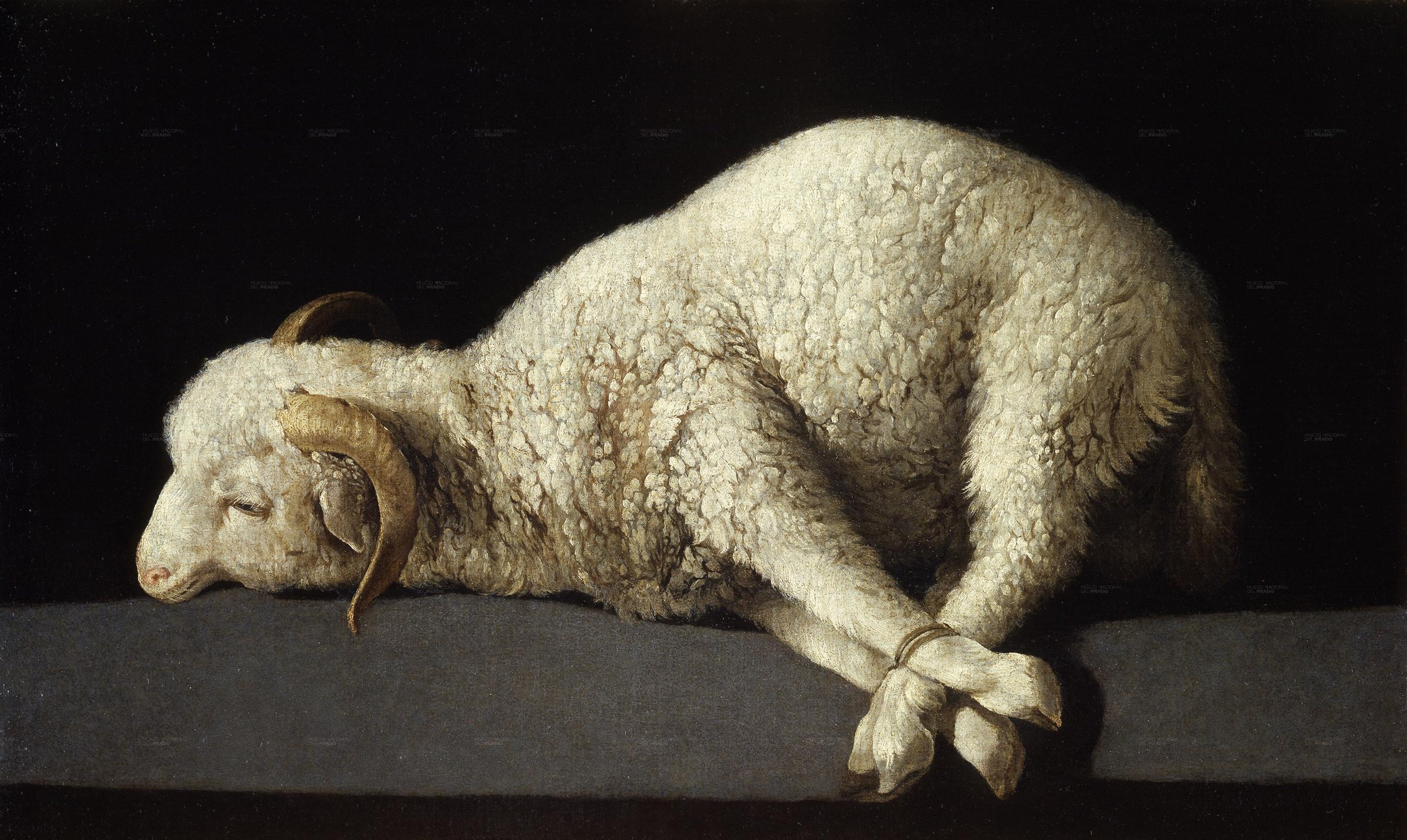
Agnus Dei, by Francisco de Zurbarán
Here we see a live lamb, tied and bound, waiting to be sacrificed. Its four legs are tied together with a rope, and its eyes are looking down, as if averting our gaze. I find it difficult, painful even, to engage with this image.
Between 1631 and 40, Francisco de Zurbarán painted five versions of this lamb, known as Agnus Dei (Latin for “Lamb of God”). This one, held at the Prado, perhaps the most unassuming of the five, is considered the finest. The art of this period is generally known for the drama it evokes, as seen in paintings by Rembrandt or Caravaggio. This piece, however, is made poignant because of its simplicity.
Upon seeing his cousin Jesus emerge from the wilderness, John the Baptist calls out, “Behold, the Lamb of God, who takes away the sin of the world.” (John 1:20). For the Jews, “Lamb of God” would have recalled the story of the Passover in Egypt, when the God instructed the Hebrew people to smear the blood of a lamb over the doorway. The angel of death would pass over that house, protecting the firstborn.
I’ve always wondered if, in that moment, John had an inkling of what was to come. Was this a prophetic moment of his sensing the death of Jesus on our behalf? Later, when John is languishing in Herod’s prison, he seems less certain. Perhaps that is just like us? Sometimes confident and other times faltering in our faith.
I invite you to spend a few moments with this painting.
Here are some thoughts to consider:
What is stirring in your heart as you gaze at this image? Like me, do you find you want to untie the lamb and set it free from its suffering? If so, what do you think is beneath that desire?
Sit with the suffering of the lamb. Consider the places where you or those you love are suffering. Share that with Jesus, soaking in the truth that he is the Man of Sorrows.