
Watercolor Painting as a Spiritual Practice
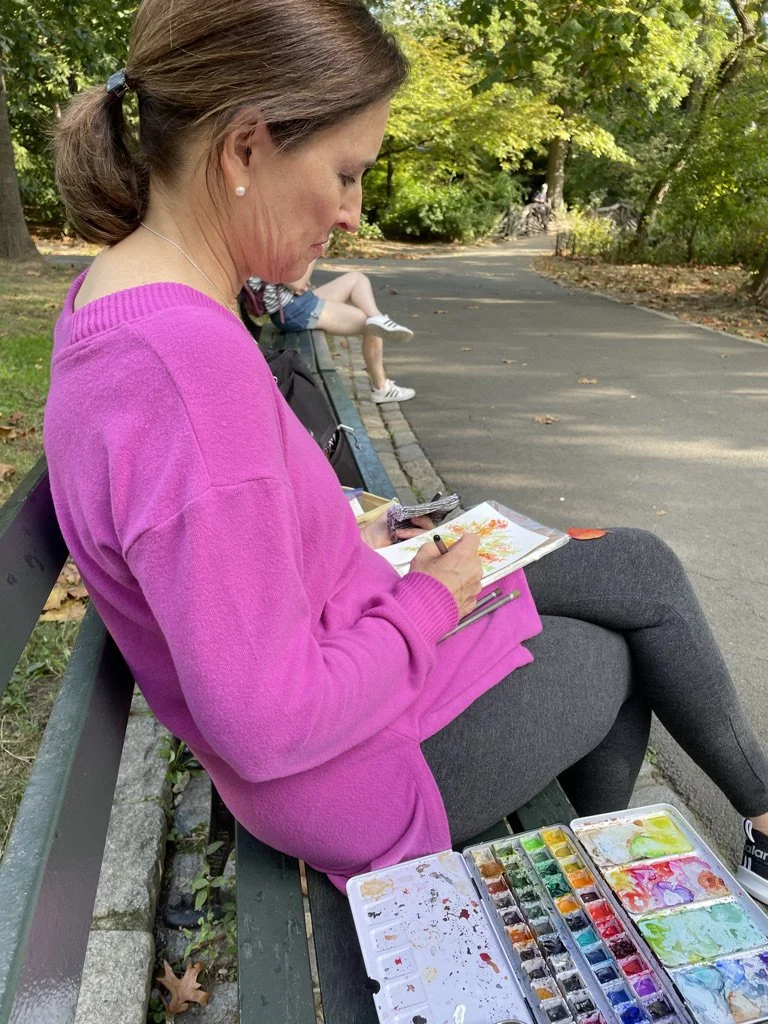
Painting a pretty fall scene in Central Park, NYC
Practicing watercolor is not only delightful, but has also helped me grow in my walk with God in so many ways.
Here are a few ways that the regular practice of watercolor has formed me spiritually:
Watercolor teaches us to pay attention.
Watercolor teaches us to truly see. Before adding paint to paper, we must closely observe the subject, noting light and shadow and considering color. This cultivates an attentive, grateful wonder that is a form of contemplative prayer. Learning to truly see a single flower can be an act of worship.
Watercolor teaches us about submission and surrender.
Watercolor resists control in a way other media don't — paint mixed with water moves as it will. Sometimes, it bleeds and blooms in surprising ways. When something unexpected happens in my painting, I pause to consider what I might do next. This small act helps me embrace mistakes. There’s something deeply formative about working with a medium you can’t fully control.
Watercolor cultivates patience.
You cannot rush watercolor. I have ruined many paintings by not letting a layer dry before adding more paint. This is a bodily, practiced experience of what it means to wait on God.
Watercolor teaches us the value of light.
Unlike other kinds of painting, watercolor works by preserving the white of the paper. The most beautiful way to show light is not to apply it, but to protect and reveal it. It’s a good reminder that as Christians, we don’t generate light; we clear away whatever obscures it.
Watercolor involves the whole body.
Painting is physical. Steady breathing (we sometimes hold our breath without realizing it!), awareness of our posture, and the way we hold a brush all matter. It’s a gentle reminder that spiritual formation isn’t purely cerebral. How we hold our bodies matters, too.